
Businesses today face a constant challenge: balancing scalability, performance, and control in their IT infrastructure. Public cloud platforms offer flexibility and rapid scalability, while traditional colocation provides dedicated hardware and predictable performance.
Cloud colocation combines the best of both worlds. By integrating colocation infrastructure with cloud services, organizations can create a hybrid architecture that delivers the flexibility of cloud computing alongside the reliability and control of private hardware.
This model is becoming increasingly popular as companies modernize their infrastructure while maintaining performance, security, and cost efficiency.
Many organizations exploring hybrid strategies begin by understanding the differences between cloud vs colocation infrastructure before implementing a combined approach.
Liberty Center One helps businesses evaluate cloud and colocation infrastructure strategies designed to balance performance, scalability, security, and control.
What Is Cloud Colocation?
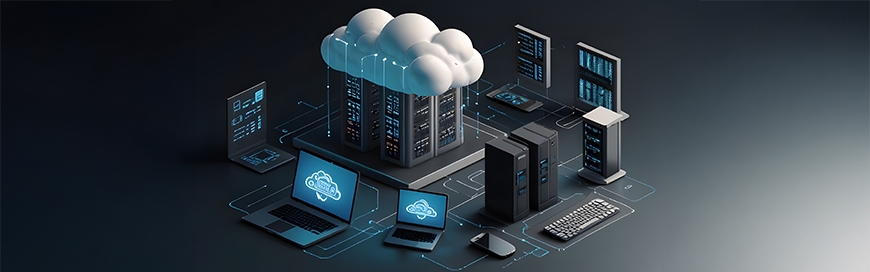
Cloud colocation is an infrastructure strategy where businesses host their physical servers in a colocation data center while connecting those systems directly to public or private cloud platforms.
Instead of choosing between cloud computing and colocation, organizations use both together. Physical servers remain in a secure colocation facility, while cloud services provide scalable computing resources when needed.
This hybrid approach allows companies to run stable workloads on dedicated hardware while using cloud platforms for applications that require elasticity or rapid scaling.
Many businesses implement this model as part of a broader hybrid cloud infrastructure strategy designed to optimize performance, flexibility, and cost.
What is cloud colocation?
Cloud colocation is the integration of colocation infrastructure with public or private cloud services, allowing businesses to combine dedicated hardware with scalable cloud resources.
Key Takeaways
- Cloud colocation combines dedicated colocation infrastructure with scalable public or private cloud resources.
- Businesses can keep predictable workloads on dedicated hardware while using cloud resources for variable demand.
- Cloud colocation can improve infrastructure control, performance, scalability, and cost efficiency.
- Common use cases include hybrid cloud, disaster recovery, workload bursting, and data sovereignty.
- The right cloud colocation strategy depends on workload requirements, security needs, scalability, and long-term infrastructure goals.
Cloud vs Colocation: What’s the Difference?
| Feature | Cloud Computing | Colocation | Cloud Colocation |
|---|---|---|---|
| Hardware ownership | Provider | Customer | Customer |
| Scalability | Very high | Moderate | High |
| Infrastructure control | Limited | Full | Full |
| Cost model | Operating expense | Capital expense | Hybrid |
| Performance consistency | Variable | Very stable | Stable + scalable |
Cloud environments are ideal for dynamic workloads, while colocation environments provide consistent performance and infrastructure control. Cloud colocation combines these benefits, allowing organizations to run predictable workloads in colocation while scaling into the cloud when demand increases.
Organizations comparing infrastructure models often explore enterprise colocation services alongside cloud deployment options.
Why Businesses Combine Cloud and Colocation
Performance Optimization
Dedicated hardware in a colocation data center provides consistent performance for mission-critical workloads. Applications such as databases, ERP systems, and latency-sensitive platforms often perform better on dedicated infrastructure.
Scalability and Flexibility
Public cloud platforms allow organizations to scale computing resources quickly. Businesses can run baseline workloads on colocation servers while expanding capacity in the cloud when demand increases.
This approach is common among organizations adopting hybrid IT infrastructure solutions.
Cost Efficiency
Cloud-only environments can become expensive when workloads are predictable or continuously running. Colocation helps reduce long-term costs by hosting steady workloads on owned hardware, while cloud resources handle temporary or variable demand.
Security and Compliance
Organizations in regulated industries often require direct control over infrastructure and data. Colocation facilities provide secure environments with redundant power, physical security, and network reliability, while still enabling connectivity to cloud platforms.
Many companies implement this model while planning secure disaster recovery infrastructure.
How Cloud Colocation Works
Cloud colocation environments rely on high-speed network connections between a colocation data center and major cloud providers such as:
- AWS
- Microsoft Azure
- Google Cloud
These direct connections allow businesses to move workloads between environments quickly and securely.
Applications may run partially in the cloud while databases or sensitive systems remain on dedicated servers in the colocation facility.
This architecture is commonly referred to as hybrid cloud infrastructure, and many organizations deploy it as part of a broader hybrid cloud deployment strategy.
Hybrid cloud infrastructure combines private or dedicated infrastructure with public cloud resources so workloads can operate across both environments based on performance, security, scalability, and business requirements.
Liberty Center One supports businesses building cloud and colocation environments that require secure connectivity, dedicated infrastructure, and scalable cloud resources.
Common Cloud Colocation Use Cases
Hybrid Cloud Architecture
Many organizations deploy hybrid cloud environments where critical infrastructure remains in colocation while applications scale in the cloud.
Disaster Recovery
Colocation facilities often serve as disaster recovery locations, while cloud platforms provide backup replication and recovery automation.
Businesses planning resilient infrastructure frequently invest in disaster recovery colocation solutions.
Workload Bursting
During periods of high demand, applications running in colocation environments can temporarily expand into cloud infrastructure to handle additional traffic.
Data Sovereignty
Companies that must maintain strict control over data storage and compliance requirements often keep sensitive workloads in colocation while leveraging cloud resources for less sensitive applications.
When Cloud Colocation Makes Sense
Cloud colocation is particularly valuable for organizations that:
- need consistent performance for critical workloads
- want to reduce long-term public cloud costs
- require greater infrastructure control
- operate hybrid or multi-cloud environments
- need scalable infrastructure without abandoning dedicated hardware
Many enterprises adopt this model while evaluating long-term colocation data center strategies.
The Future of Cloud Colocation
As businesses continue modernizing their infrastructure, hybrid IT strategies are becoming the standard.
Cloud colocation allows organizations to adopt cloud services without sacrificing control over hardware, performance, or security.
By combining dedicated infrastructure with scalable cloud platforms, companies can build resilient, cost-efficient architectures designed for long-term growth.
Contact Liberty Center One today to explore how cloud and colocation can work together to support your performance, scalability, security, and infrastructure goals.
Frequently Asked Questions
Q. What is cloud colocation?
A. Cloud colocation is the integration of colocation infrastructure with public or private cloud services, allowing businesses to combine dedicated hardware with scalable cloud resources.
Q. What is the difference between cloud and colocation?
A. Cloud computing uses provider-managed infrastructure that can scale on demand, while colocation allows businesses to own and control their hardware within a third-party data center.
Q. How does cloud colocation work?
A. Cloud colocation connects dedicated infrastructure housed in a colocation data center with public or private cloud resources, allowing workloads and data to operate across both environments.
Q. What are the benefits of cloud colocation?
A. Cloud colocation can provide consistent performance, greater infrastructure control, scalable computing capacity, security, and cost efficiency.
Q. When does cloud colocation make sense for a business?
A. Cloud colocation can make sense when a business needs dedicated infrastructure for predictable or sensitive workloads while also requiring cloud scalability for changing demand.
Q. Can cloud colocation support disaster recovery?
A. Yes. Colocation infrastructure can support disaster recovery while cloud platforms provide backup replication, recovery resources, and additional geographic resilience.
Q. Can cloud colocation reduce cloud costs?
A. Cloud colocation can help reduce costs for predictable, continuously running workloads by keeping them on dedicated infrastructure while using cloud resources for temporary or variable demand.
About the Author
Jason Huebner is the Managing Director at Liberty Center One.
Liberty Center One brings decades of experience providing secure cloud hosting and datacenter services for businesses. As an IT infrastructure solutions provider, Liberty Center One specializes in data protection, colocation, white-glove cloud migration, and backup and disaster recovery solutions backed by highly skilled professionals ready to support critical business needs. Learn more at https://www.libertycenterone.com/