
As businesses grow and their technology needs expand, managing IT infrastructure becomes more challenging. Companies must maintain reliable systems, secure their data, and support increasing workloads without downtime.
For many organizations, maintaining servers in an office server room is no longer practical. Power limitations, cooling requirements, security concerns, and maintenance costs make in-house infrastructure difficult to manage.
This is where business colocation becomes an attractive solution.
Business colocation allows companies to place their servers and networking equipment in a professionally managed colocation data center instead of maintaining their own facility. These specialized environments provide enterprise-grade power, cooling, connectivity, and security while businesses retain ownership and control of their hardware.
For organizations that require high availability, scalability, and reliable connectivity, colocation is often a more efficient and cost-effective infrastructure strategy.
What Is Business Colocation?
Business colocation is a service where companies place their servers, storage devices, and networking equipment inside a third-party colocation data center.
Instead of building and maintaining a private data center, businesses rent rack space, power, and connectivity within a professionally managed facility.
Colocation providers supply the physical infrastructure required to keep servers running reliably, including:
- Redundant power systems
- Advanced cooling systems
- Physical security and monitoring
- High-speed internet connectivity
- Carrier-neutral network access
- Backup generators and UPS systems
While the colocation provider manages the building infrastructure, businesses remain responsible for managing and maintaining their own hardware and software.
This approach gives companies the benefits of a modern data center without the enormous capital investment required to build one.
How Business Colocation Works
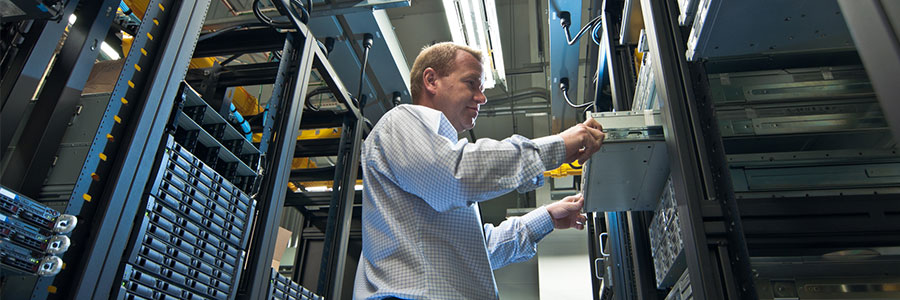
When a company uses colocation services, it installs its own servers and networking equipment inside a rack or cabinet within the data center facility.
The process typically works as follows:
First, a business selects a colocation data center provider based on factors such as location, connectivity options, reliability, and security features.
Next, the company installs its servers, storage devices, and networking equipment inside dedicated rack space provided by the colocation facility.
Once installed, the equipment connects to high-speed network carriers available within the facility. Many data centers are carrier-neutral, meaning businesses can choose from multiple internet providers for better redundancy and performance.
The colocation provider manages the facility infrastructure, including cooling systems, power distribution, and physical security.
Businesses can then manage their systems remotely while benefiting from the reliability and redundancy of a professional data center environment.
Key Benefits of Business Colocation
Many organizations choose colocation because it provides significant advantages compared to maintaining on-site server infrastructure.
Below are some of the most important benefits.
Lower Infrastructure Costs
Building and maintaining a private data center requires substantial investment in power systems, cooling equipment, security, and networking infrastructure.
Business colocation eliminates most of these costs. Instead of investing in expensive infrastructure, companies pay for the rack space and services they need.
This allows businesses to reduce capital expenses while gaining access to enterprise-level infrastructure.
Improved Reliability and Uptime
Colocation facilities are designed for high availability.
Most data centers offer redundant power systems, backup generators, multiple network connections, and advanced cooling infrastructure to ensure servers remain operational even during outages.
Many providers guarantee uptime through service level agreements (SLAs) that ensure consistent availability.
For businesses that rely on online applications, e-commerce platforms, or critical internal systems, this level of reliability is essential.
Enhanced Security
Professional data centers implement multiple layers of security to protect equipment and data.
These measures often include:
- 24/7 security monitoring
- Biometric access controls
- Surveillance cameras
- Restricted access areas
- On-site security personnel
Physical security at a colocation facility is typically far stronger than what most companies can implement in an office environment.
Scalability for Growing Businesses
As organizations grow, their infrastructure needs change.
Colocation facilities make it easy to expand by adding more servers, additional rack space, or higher bandwidth connectivity.
Instead of redesigning an internal server room or relocating equipment, businesses can scale within the same facility.
This flexibility makes colocation an ideal solution for growing companies and expanding IT environments.
Better Network Connectivity
Colocation data centers are often located near major network hubs and internet exchange points.
This allows businesses to connect directly to multiple network carriers, improving performance and reducing latency.
Many facilities are carrier-neutral, meaning companies can choose from several connectivity providers rather than relying on a single ISP.
This improves both network redundancy and performance.
Disaster Recovery and Business Continuity
Natural disasters, power outages, and hardware failures can disrupt business operations.
Colocation facilities are built to support business continuity and disaster recovery strategies.
Redundant infrastructure, backup power systems, and multiple network connections help ensure operations remain online even during unexpected events.
For organizations that cannot afford downtime, this resilience is a major advantage.
Business Colocation vs Cloud Hosting
Many organizations compare colocation with cloud computing when deciding how to manage infrastructure.
While both solutions offer advantages, they serve different purposes.
With cloud hosting, businesses rent virtual infrastructure from a cloud provider. The provider manages all physical hardware, and customers pay based on usage.
With business colocation, companies own their hardware but house it in a professional data center environment.
Key differences include:
Cloud hosting offers flexibility and rapid scalability but may involve ongoing operational costs and less hardware control.
Colocation provides full control over hardware while benefiting from enterprise-grade infrastructure.
Many organizations combine both approaches using a hybrid cloud strategy, where critical systems run in colocated servers while other workloads operate in the cloud.
Business Colocation vs On-Premise Data Centers
Before colocation became common, many companies maintained servers inside their own facilities.
However, running an on-premise data center presents several challenges.
Office server rooms often lack the redundant power systems, cooling infrastructure, and network connectivity available in professional data centers.
Maintaining this infrastructure can be expensive and requires specialized expertise.
Colocation provides the advantages of a modern data center environment without requiring businesses to build and manage their own facility.
For many organizations, moving infrastructure from on-premise environments to a colocation facility significantly improves reliability and efficiency.
How Much Does Business Colocation Cost?
The cost of business colocation depends on several factors.
These typically include:
- Amount of rack space required
- Power consumption
- Network bandwidth usage
- Number of servers installed
- Additional services such as remote hands support
Smaller deployments may require only a single rack or partial cabinet, while larger organizations may lease multiple cabinets or private suites.
Compared to building and maintaining a private data center, colocation often provides a more predictable and manageable cost structure.
When Businesses Should Consider Colocation
Business colocation is particularly beneficial for organizations that require reliable infrastructure but do not want to operate their own data center.
Companies often choose colocation when:
- Their internal server room reaches capacity
- They need higher reliability and uptime
- Security requirements increase
- Network performance becomes critical
- Disaster recovery infrastructure is required
- IT systems are expanding rapidly
Growing companies, technology firms, healthcare providers, financial organizations, and SaaS businesses frequently rely on colocation services to support critical infrastructure.
Choosing the Right Business Colocation Provider
Not all colocation facilities offer the same capabilities. Businesses should evaluate several factors when selecting a provider.
Important considerations include:
- Data center reliability and uptime guarantees
- Power redundancy and backup systems
- Cooling infrastructure
- Physical security measures
- Network connectivity and carrier options
- Geographic location
- Scalability options
Choosing a provider with a strong track record and enterprise-grade infrastructure can significantly improve long-term IT performance and reliability.
Why Business Colocation Is a Smart Infrastructure Strategy
For organizations that require reliable infrastructure without building their own data center, business colocation offers an effective solution.
It combines the control of owning hardware with the reliability and performance of a professional data center environment.
By leveraging colocation services, businesses gain access to high-performance infrastructure, improved uptime, stronger security, and scalable connectivity.
As digital operations continue to grow, colocation remains one of the most practical strategies for supporting modern business IT environments.
Learn more about colocation and how it can benefit your business by speaking with a Liberty Center One expert. Contact us today.